Below the human hand-eye threshold
Kyber achieves single-digit millisecond latency end-to-end in optimal conditions.
One SDK. Every Machine.
Kyber handles everything required for real-time machine interaction: video capture, audio streaming, control inputs, sensor telemetry — all synchronized to a single timeline, all through a single encrypted connection.
Robotics
Physical AI Needs a Nervous System
The infrastructure layer between human intent and machine action? Training, monitoring, and instant human takeover for robots at any scale.
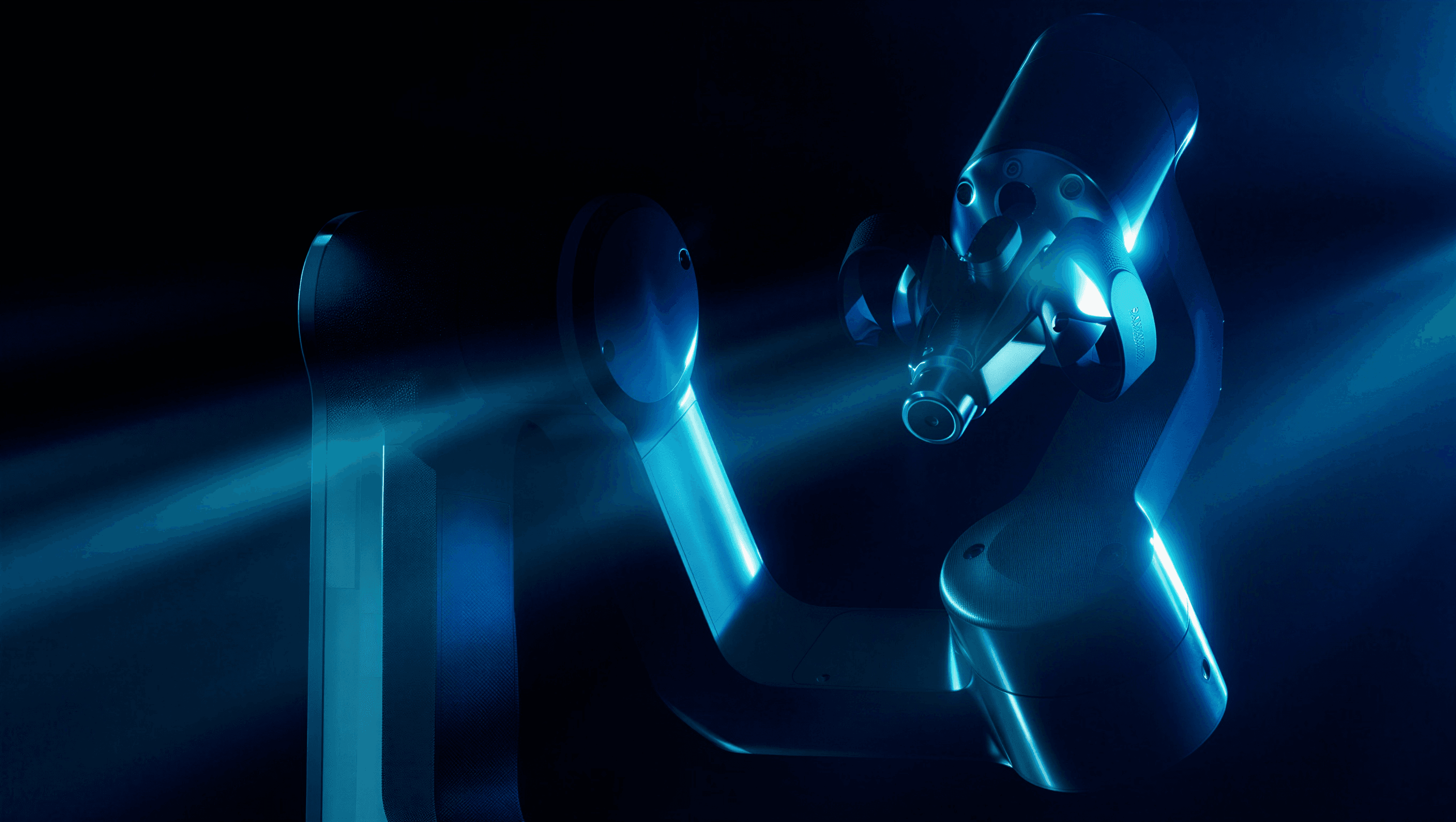
AI Agents
Interdum non posuere donec fermentum
Sit nec ullamcorper consequat nulla sollicitudin egestas vestibulum ut. Facilisi nibh venenatis sed tempor lorem elementum molestie dictum lorem.
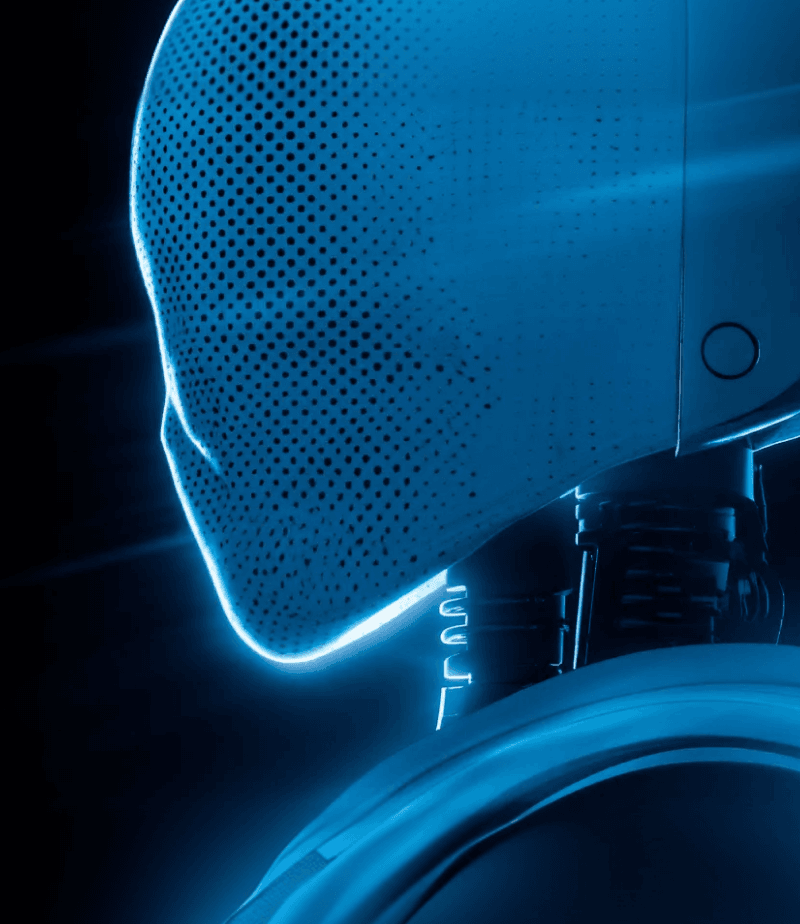
Drones
Felis gravida convallis mauris varius molestie.
Quam elementum eget consequat venenatis sed posuere. Pulvinar nulla sagittis lectus nisi. Tortor auctor varius in sit nullam fermentum. Volutpat.
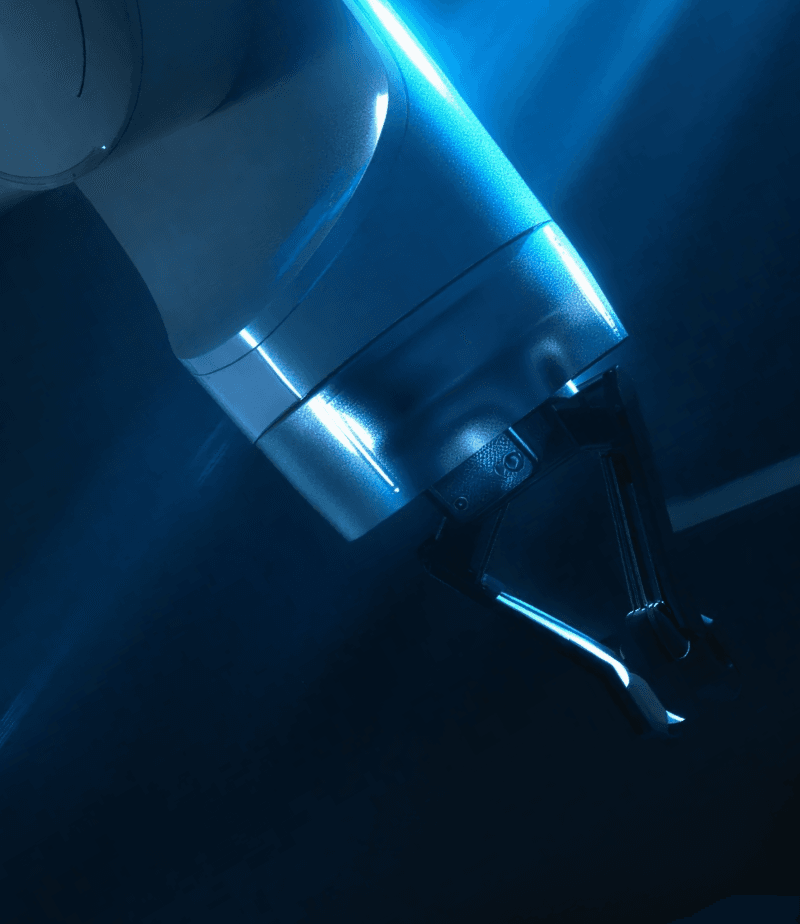
Immersive Cloud
Non viverra elementum
Dui pretium pellentesque mi libero. Sit in lacus sapien est. Aliquet leo nec turpis purus eu commodo consectetur egestas leo. Parturient parturient.
Remote Desktop
Nec etiam morbi tristique tristique
At libero sed nec lectus sed. Phasellus mattis mauris convallis donec risus maecenas viverra et cursus. Nisl nec urna duis aliquam. Ornare id viverra.
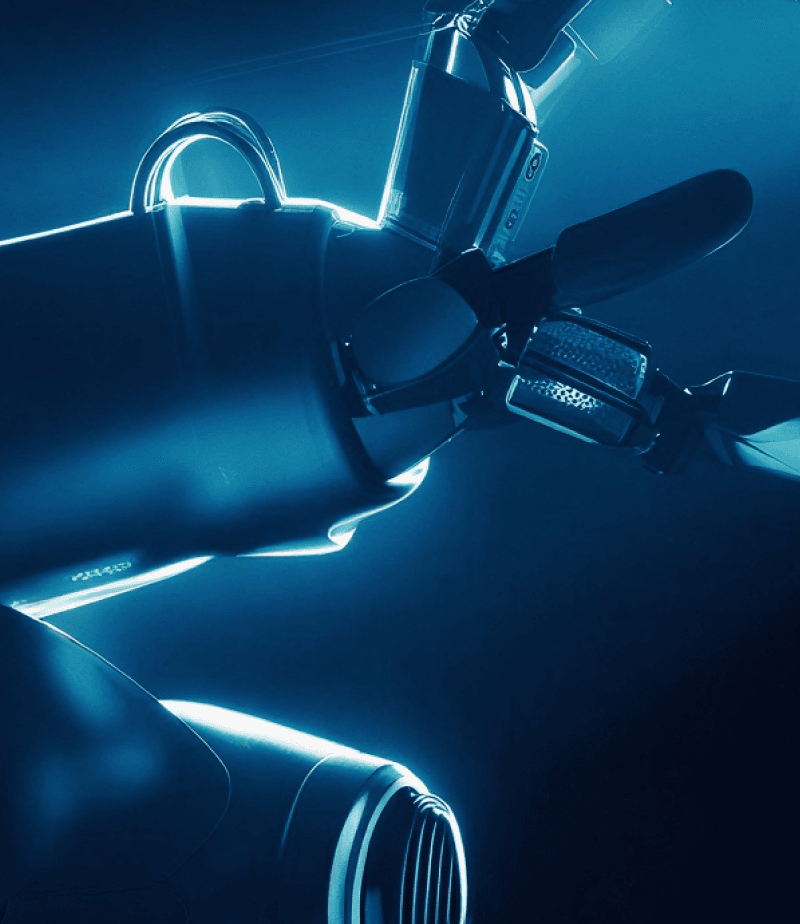
The Difference Between Control and Observation
At 200ms of delay, a remote-controlled vehicle has already traveled meters past where you intended to stop. A surgical instrument has already cut where you didn't mean to cut.
Kyber.
The cursor is attached to your finger. The robot responds as your hand moves.
Perceptible lag.
WebRTC optimizes for consistent latency, not low latency.
You're watching what you just did.
Fine for email. Dangerous for surgery.
Too much lag.
Unusable for anything interactive.
Kyber Optimizes for One Metric: Time from Intent to Action
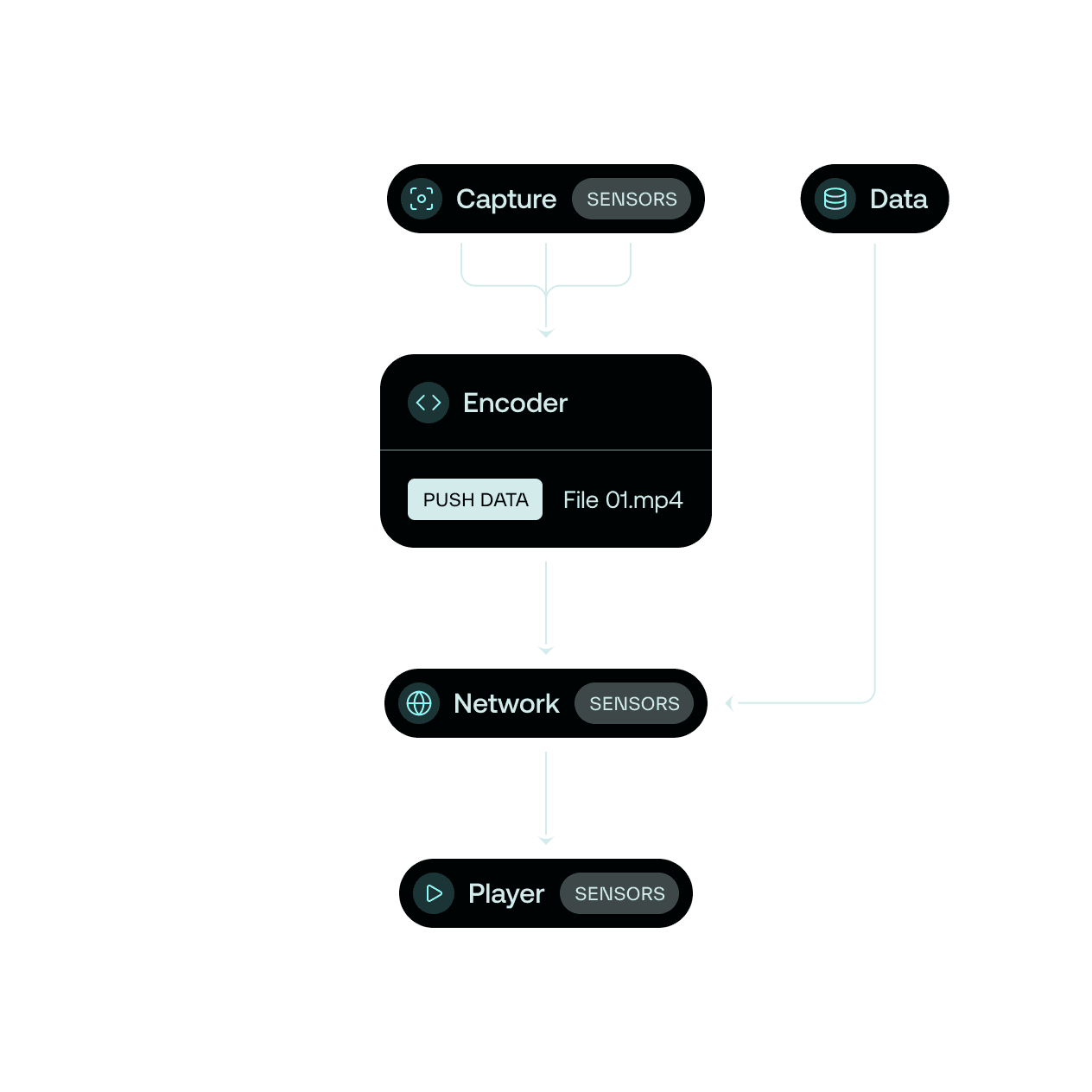
Push, Don't Pull
Most real-time systems use buffers between every step — partly to synchronize streams, partly to smooth out network variation. The result is sometimes consistent latency, but also higher latency. Kyber makes a different trade-off: we push data forward the instant it's ready with variable, adaptable quality, never delay.
As soon as one step completes, we push to the next — from capture to encoder to network to player to human. No waiting. No buffers. No feedback loops slowing things down.
Single Clock Synchronization
Kyber computes clock drift continuously and rewrites everything to a unified timeline. The same clock in playback that was used live.
Single Encrypted Connection
One HTTP connection. One handshake. QUIC/HTTP3 transport. Encrypted end-to-end by default. The complexity disappears into the SDK.
Two Types of Data. Two Levels of Priority.
If you're 10 frames behind, Kyber shows you the latest frame and drops the rest. But if you press a key, that keystroke arrives — always.
Video & Audio
Multiple camera feeds, microphone streams, screen captures — all synchronized to the same timeline.
Telemetry & Sensor Data
Position tracking, force feedback, temperature, pressure, GPS coordinates — any IoT capture synchronized with video.
Subtitles & Metadata
Timestamped data streams for overlays, coordinates, or custom sensor formats.
Control & Data Channels
Mouse, keyboard, gamepad, touch, gesture — bidirectional with the same low latency. These use retransmission. They cannot be dropped.
Data Channels
USB passthrough, file transfer, copy/paste, printer redirection — arbitrary bidirectional data with guaranteed delivery.
Custom Protocols
Application-specific control channels. Same priority, same guarantees.
Networks Fail. Kyber Adapts.
Satellites lose lock. Cell towers get congested. The question isn't whether your connection will degrade, it's what happens when it does.
Forward Error Correction
Reconstruct missing packets locally.
Adaptive Quality
Bandwidth drops, quality drops, latency doesn't.

Graceful Degradation
Prioritize control over video fidelity.
Protocol-Level Protection. Zero Trust Architecture.
Nunc justo dictumst tristique proin nibh nunc consequat diam. Sed nunc porttitor ullamcorper vestibulum duis viverra mauris. Viverra est lorem aliquam sit lacus sollicitudin egestas. Duis.
End-to-End Encryption
Built on QUIC/HTTP3. Encrypted by default. We can't see your traffic even if it routes through Kyber infrastructure.
Access Controls
Fine-grained permissions for who can connect, what they can access, and what actions they can take.
Content Protection
DRM capabilities for sensitive video streams. Screenshot blocking where the OS supports it. The same protection Netflix uses, applied to your machine feeds.
Flexible
Architectures

One-to-One
One machine, one operator. The simple case.
One-to-Many
One operator monitors a fleet of machines. Or multiple operators collaborate on a single machine. Or one operator controls while many observe.
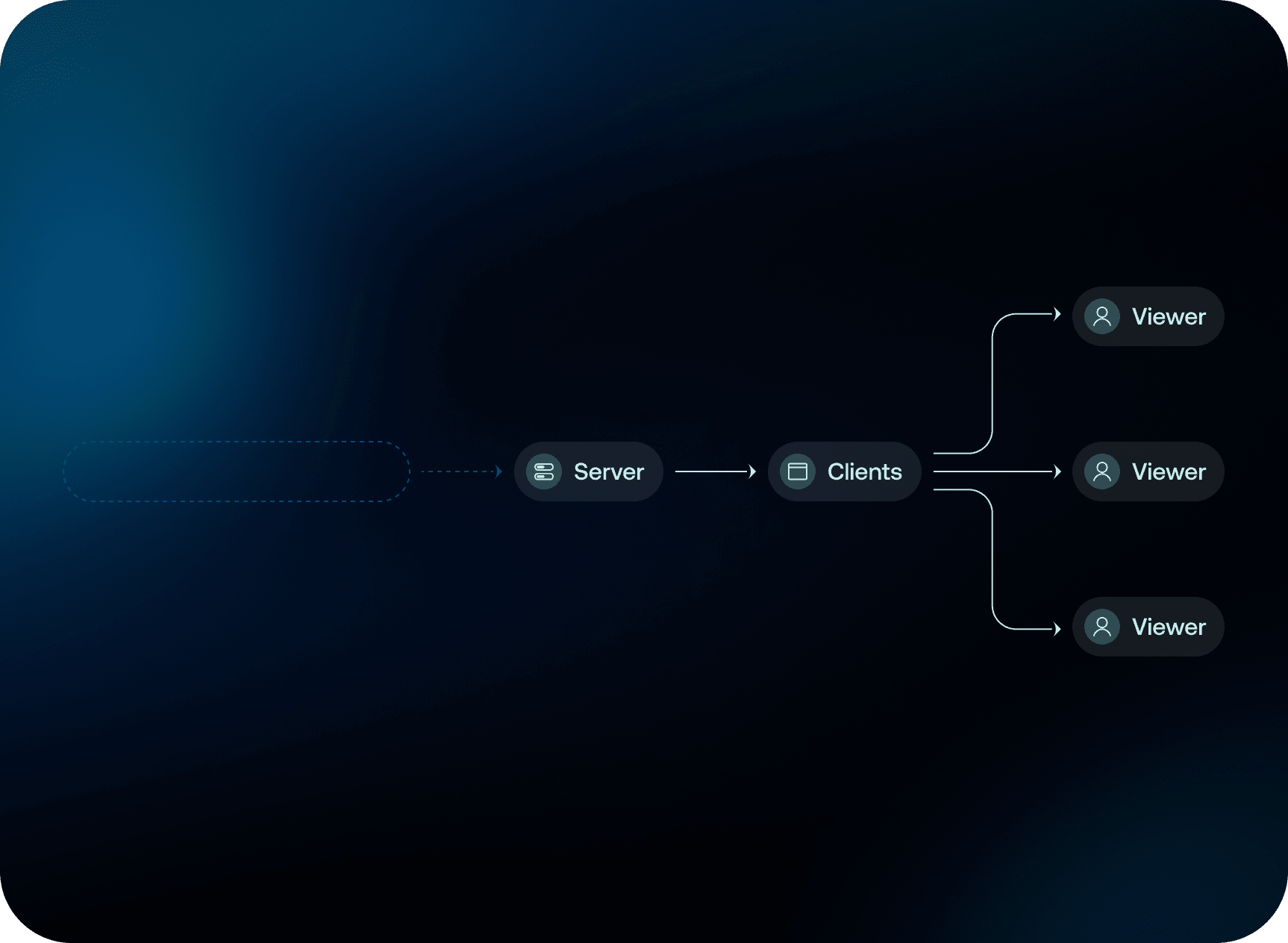
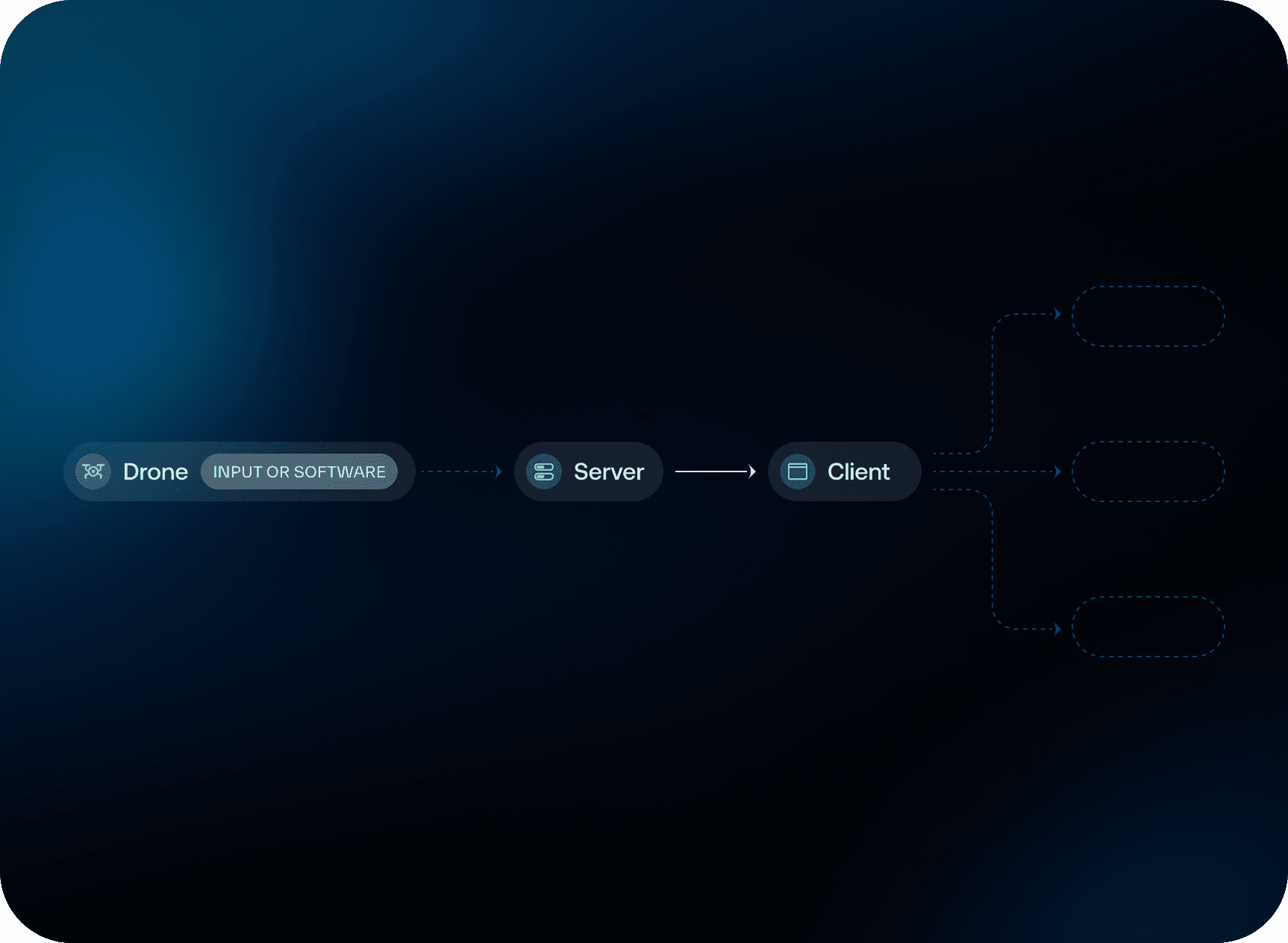
Chained Connections
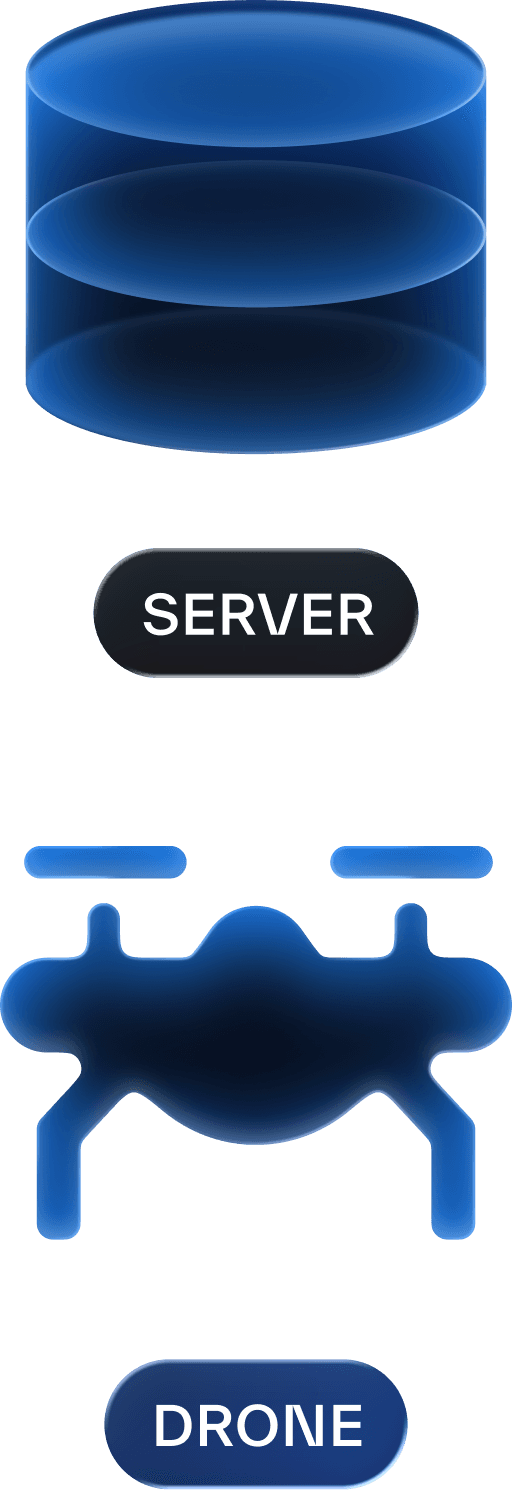
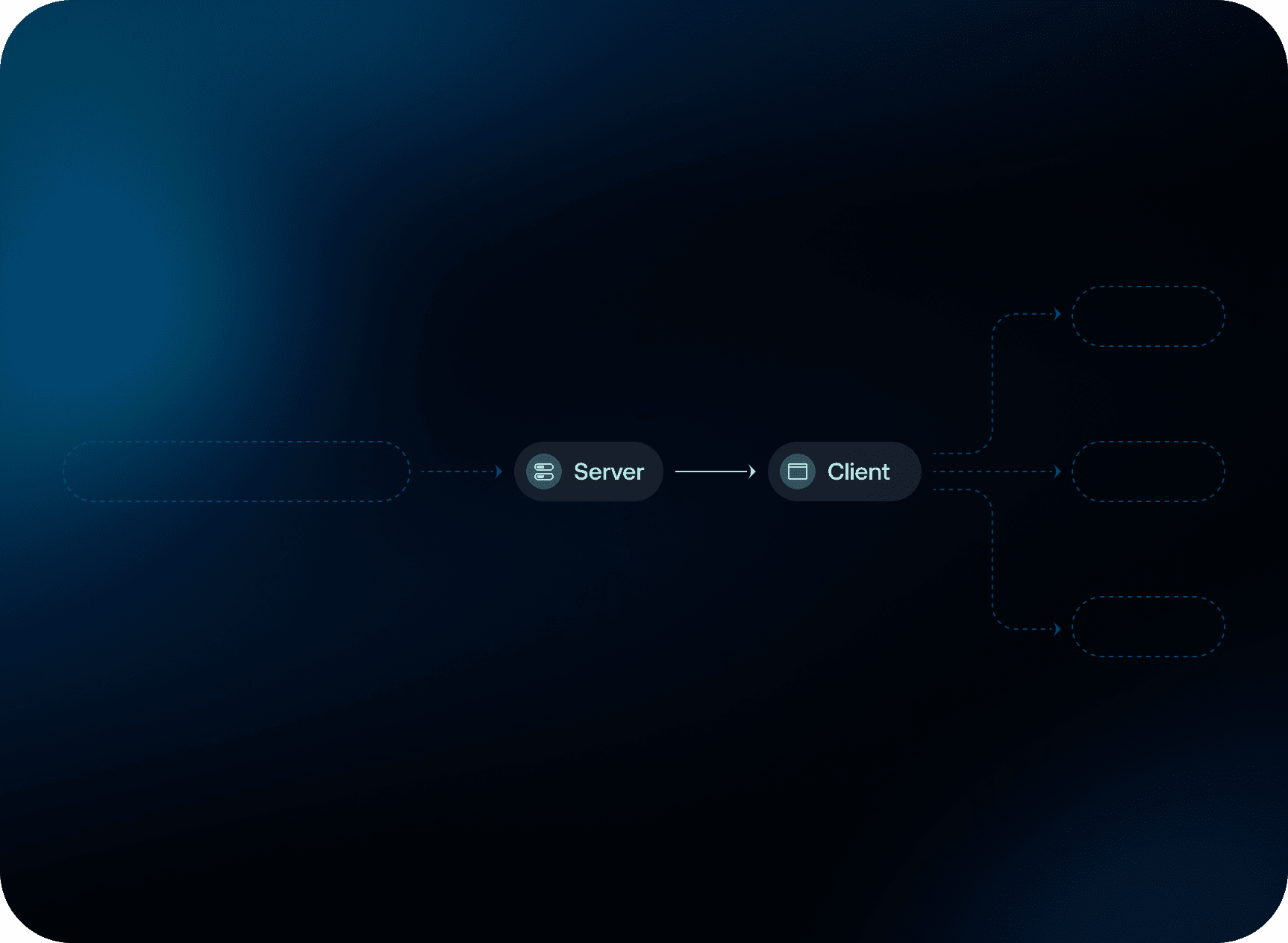
Server to server to client. Route across network boundaries — edge to cloud to operator.
One Integration. Every Platform.
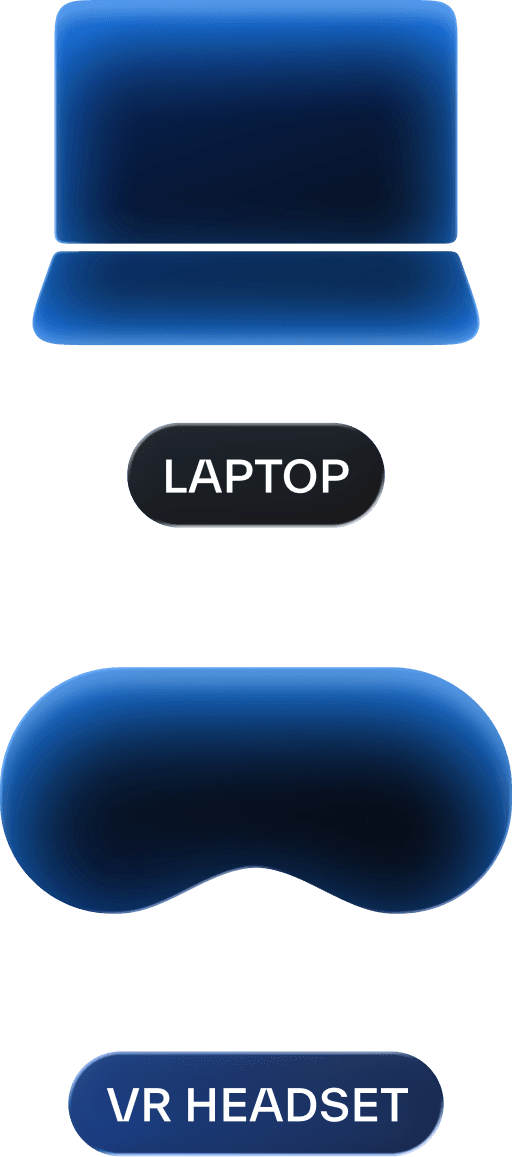
The same SDK powers surgical robots and remote desktops. Drone fleets, XR headsets, and browser-based applications.







NOT WebRTC.
WebRTC was built a decade ago for video calls between humans. 100-200ms latency is fine for conversation. It's dangerous for machine control.
Kyber is radically simpler. One SDK. One connection. Consistent behavior across platforms. We optimize for the lowest possible latency. The companies with unlimited resources built custom teleoperation stacks because WebRTC couldn't do what they needed. It took them years and tens of millions of dollars.
Kyber is that same capability, available to everyone else. Integrate in weeks, not years.
We Built VLC & FFmpeg
We're Building What Comes Next
Powering the World’s Video
VLC has been installed on billions of devices worldwide. FFmpeg encodes most of the video on the internet.
Two Decades Perfecting Streaming
Our team spent two decades solving video playback, streaming protocols, and real-time communication.
Our team spent two decades solving video playback, streaming protocols, and real-time communication.
Kyber is the next chapter: the infrastructure layer that connects human or AI intent with physical machine action. The protocol that makes remote machines feel local.
Get Started in Minutes.
Ship in Weeks.
Open Source Core
AGPL licensed. Inspect the code. Understand how it works. Contribute improvements.
Complete Documentation
Guides, API references, example projects. Everything you need to integrate.
SDK Downloads
Native libraries for every supported platform. One integration path.